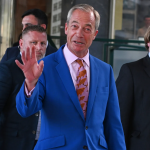
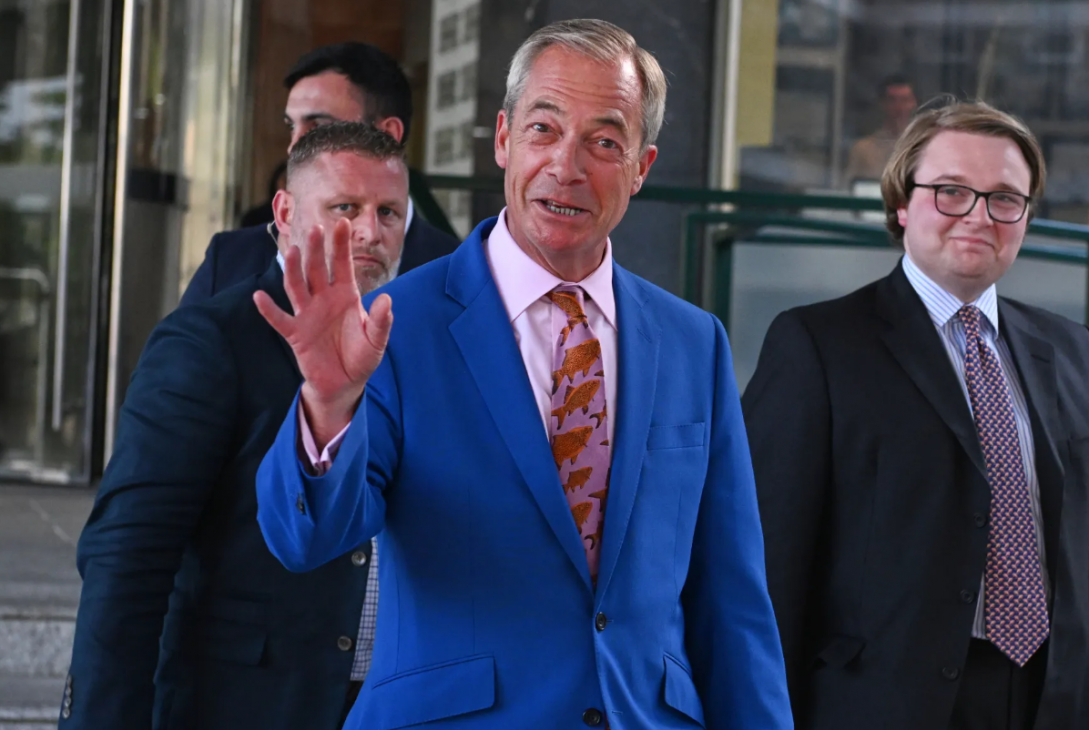
Nigel Farage is one of the most recognizable and influential figures in modern British politics. Best known for his leadership of the United Kingdom Independence Party (UKIP) and later the Reform UK movement, Farage played a central role in the campaign for the United Kingdom to leave the European Union. Throughout his political career, he has become known for his outspoken communication style, advocacy of national sovereignty, criticism of European integration, and ability to influence public debate. Whether admired or criticized, Farage has had a significant impact on British politics during the twenty-first century.
Nigel Paul Farage was born on April 3, 1964, in Farnborough, Kent, England. He was raised in a middle-class family and attended Dulwich College, one of London’s well-known independent schools. Unlike many prominent British politicians, Farage did not attend university. Instead, after completing his education, he entered the financial sector and began working as a commodities trader in the City of London.
His experience in financial markets gave him firsthand exposure to international trade, regulation, and global economics. While building a successful career in finance, Farage developed increasingly strong views regarding Britain’s relationship with the European Economic Community, which later became the European Union. He believed that political and economic decisions affecting the United Kingdom should primarily be made by elected representatives within Britain rather than by European institutions.
Farage initially joined the Conservative Party but became dissatisfied with its support for closer European integration. In 1992, following the signing of the Maastricht Treaty, he left the Conservatives and became one of the founding members of the United Kingdom Independence Party (UKIP). The party’s central objective was British withdrawal from the European Union, a position that remained outside mainstream politics for many years.
During its early years, UKIP attracted relatively little national attention. However, Farage became known for his energetic campaigning, public speaking, and ability to communicate complex political issues in accessible language. His style differed significantly from many traditional politicians, often relying on direct language, humor, and frequent public appearances rather than formal political messaging.
Farage was elected as a Member of the European Parliament (MEP) in 1999, representing South East England. He would serve in the European Parliament for more than two decades. During this time, he became one of the institution’s most recognizable and controversial members, frequently criticizing the European Commission, the European Parliament, and the broader process of European integration.
His speeches in the European Parliament often attracted international media attention. Supporters praised his willingness to challenge powerful institutions and argue for democratic accountability, while critics viewed his speeches as confrontational and overly provocative. Regardless of political opinion, his public profile continued to grow throughout the 2000s.
Farage served multiple terms as leader of UKIP. Under his leadership, the party experienced significant electoral growth, transforming from a relatively small political movement into a major force in British politics. UKIP performed particularly well in elections to the European Parliament, eventually becoming the largest British party in the 2014 European elections—a historic achievement that demonstrated increasing public dissatisfaction with the political status quo.
Immigration became one of the central themes of Farage’s political campaigns. He argued that the United Kingdom should exercise greater control over its borders and immigration policies. Supporters believed these policies would strengthen national sovereignty and improve public services, while opponents argued that his rhetoric sometimes oversimplified complex immigration issues. Immigration remained one of the defining topics of British political debate during his leadership.
Perhaps the most significant chapter of Farage’s political career came during the campaign leading to the 2016 referendum on the United Kingdom’s membership in the European Union. Alongside numerous other politicians, organizations, and campaign groups, Farage strongly advocated for the “Leave” campaign. He argued that leaving the European Union would allow Britain to regain greater control over laws, trade policy, immigration, and national decision-making.
The referendum held on June 23, 2016, resulted in a majority voting to leave the European Union. The outcome represented one of the most consequential political decisions in modern British history. Although many political leaders and organizations contributed to the campaign, Farage became widely viewed as one of the most prominent public faces associated with Brexit.
Following the referendum, Farage announced his resignation as UKIP leader, stating that he had achieved his principal political objective. However, his involvement in public life continued. He remained active through media appearances, political commentary, and later returned to frontline politics through new political movements.
In 2019, Farage founded the Brexit Party. The new party focused primarily on ensuring that the United Kingdom completed its withdrawal from the European Union. The Brexit Party achieved immediate electoral success in the 2019 European Parliament elections, winning the largest share of the British vote and demonstrating continued public support for completing Brexit.
After the United Kingdom formally left the European Union, the Brexit Party evolved into Reform UK. The party expanded its political platform beyond Brexit to include economic reform, taxation, healthcare, energy policy, public sector efficiency, and constitutional issues. Under Farage’s influence, Reform UK sought to position itself as an alternative to Britain’s traditional major political parties.
In addition to politics, Farage has established a successful media career. He has hosted radio programs, appeared regularly on television, and provided political commentary for both British and international audiences. His communication skills have allowed him to maintain a high public profile even during periods when he was not serving as a party leader.
Farage has also become one of the most followed British politicians on social media. His online presence enables him to communicate directly with supporters, respond quickly to political developments, and participate actively in public debate. Digital communication has become an increasingly important part of his political strategy.
Throughout his career, Farage has been a highly polarizing public figure. Supporters often describe him as someone willing to challenge political establishments, defend national sovereignty, and raise issues that other politicians avoided discussing. Critics, meanwhile, argue that some of his political positions have contributed to increased polarization within British politics. His career illustrates how strongly political opinions can differ regarding major constitutional and social issues.
Farage has remained closely associated with debates concerning constitutional reform, democratic accountability, free speech, taxation, immigration, and the future direction of British politics. Even after Brexit, his influence has continued through ongoing discussions about government policy and political reform.
Personally, Farage is known for his interest in fishing, aviation, history, and outdoor activities. Before entering politics full-time, he was an enthusiastic private pilot and survived a serious aircraft accident in 2010. He has occasionally spoken about how the experience strengthened his appreciation for life and resilience.
Throughout his public life, Farage has frequently emphasized direct engagement with voters through public meetings, interviews, and local campaigning. His communication style contrasts with more traditional political messaging, often focusing on informal conversation rather than highly scripted speeches. This approach has contributed significantly to both his popularity among supporters and the attention he receives from the media.
Farage has received recognition from supporters for helping shape one of the most significant constitutional changes in modern British history through the Brexit movement. At the same time, his political career has generated considerable debate regarding Britain’s relationship with Europe, immigration policy, and national identity. These discussions continue to influence British politics long after the 2016 referendum.
Today, Nigel Farage remains one of the most influential and widely recognized figures in British public life. His career demonstrates how a politician operating outside the traditional two-party system can substantially influence national political debate and public policy. Whether viewed as a champion of national sovereignty or as a controversial political campaigner, Farage’s role in shaping contemporary British politics is widely acknowledged. His legacy is closely tied to the Brexit movement and to broader debates about democracy, governance, and Britain’s place in the world.