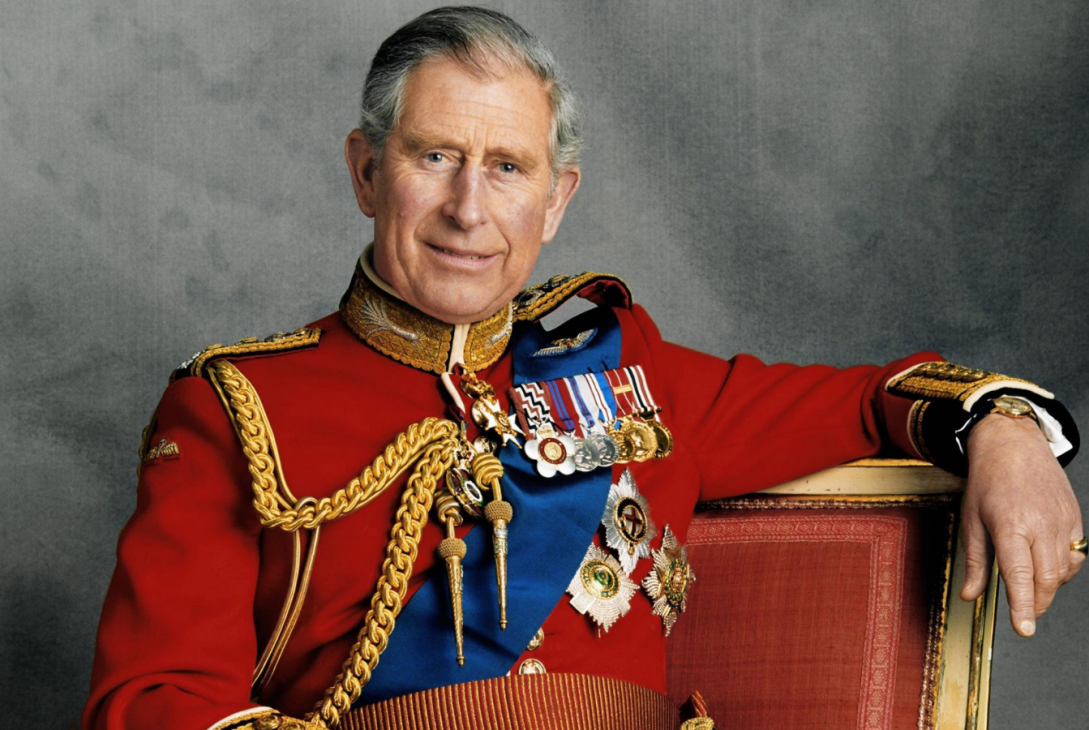
King Charles III is the King of the United Kingdom and the fourteen other Commonwealth realms. Having spent more than seven decades preparing for the throne, he became the oldest person in British history to accede to the monarchy. Throughout his life, Charles has been known not only for his royal responsibilities but also for his long-standing interest in environmental protection, architecture, organic farming, education, interfaith dialogue, and charitable work. His reign represents both continuity and modernization within one of the world’s oldest constitutional monarchies.
Charles Philip Arthur George was born on November 14, 1948, at Buckingham Palace in London, England. He was the first child of Princess Elizabeth, who later became Queen Elizabeth II, and Prince Philip, Duke of Edinburgh. At the time of his birth, his grandfather King George VI was the reigning monarch. When Queen Elizabeth II ascended the throne in 1952, Charles automatically became the heir apparent at just three years old.
Growing up as the future king meant that Charles lived under constant public attention while preparing for a role unlike any other. His education differed from that of previous heirs to the throne. Rather than being educated entirely by private tutors, Charles attended several schools, including Gordonstoun in Scotland, where his father had also studied. Although he later admitted that he found boarding school challenging, the experience helped build resilience and independence.
Following school, Charles became the first heir to the British throne to earn a university degree. He attended Trinity College, Cambridge, where he studied archaeology, anthropology, and later history. Graduating in 1970, he became the first British heir apparent to complete a university education, reflecting the monarchy’s gradual adaptation to modern society.
Like many members of the royal family, Charles served in the military. He trained with both the Royal Air Force and the Royal Navy, qualifying as a helicopter and jet pilot. During his naval service, he commanded the minesweeper HMS Bronington and gained valuable leadership experience before returning to full-time royal duties.
As Prince of Wales, a title formally invested upon him in 1969, Charles became one of the busiest working members of the royal family. He represented Queen Elizabeth II on countless official visits across the United Kingdom and around the world, meeting world leaders, supporting charities, promoting British interests abroad, and strengthening diplomatic relationships within the Commonwealth.
One of Charles’s greatest contributions has been his charitable work. In 1976, he founded The Prince’s Trust, an organization dedicated to helping disadvantaged young people develop skills, find employment, start businesses, and continue their education. Over the decades, the charity has supported more than one million young people, becoming one of the United Kingdom’s most successful charitable organizations.
Education and youth development remained central themes throughout Charles’s public life. He frequently visited schools, universities, vocational training centers, and community organizations, encouraging young people to pursue careers, entrepreneurship, and lifelong learning. His support for vocational education helped raise awareness of alternatives to traditional university pathways.
Environmental protection became another defining aspect of Charles’s career long before climate change became a major international political issue. Beginning in the 1970s, he publicly warned about pollution, deforestation, biodiversity loss, and unsustainable development. At the time, many regarded his concerns as unusual or even controversial. Decades later, many of the environmental issues he highlighted became central topics in global policy discussions.
Charles has consistently promoted sustainable agriculture, renewable energy, conservation, and responsible land management. His own estate has served as a model for organic farming practices, biodiversity protection, and environmentally responsible land use. He has frequently argued that economic development and environmental stewardship should work together rather than compete against each other.
Architecture is another area in which Charles has taken a strong personal interest. Over many years, he expressed concern about certain aspects of modern urban development, advocating instead for traditional architecture, walkable communities, and sustainable city planning. Although some of his views generated debate among architects, they also influenced discussions about urban design and heritage preservation.
Charles has long promoted interfaith dialogue and religious understanding. While serving as Prince of Wales, he regularly met leaders from various religious traditions, emphasizing mutual respect and cooperation between different faith communities. His approach reflects the increasingly multicultural and multi-faith character of modern British society.
In his personal life, Charles married Lady Diana Spencer in 1981. Their wedding at St. Paul’s Cathedral attracted a worldwide television audience of hundreds of millions and became one of the most famous royal ceremonies in history. The couple had two sons, Prince William and Prince Harry, who would later become prominent members of the royal family.
Although Charles and Diana initially appeared to embody a modern fairy-tale marriage, their relationship faced growing difficulties. They separated in 1992 and officially divorced in 1996. The death of Diana in a car accident in Paris in 1997 deeply affected both the royal family and the public, becoming one of the most significant moments in modern royal history.
In 2005, Charles married Camilla Parker Bowles, who became Duchess of Cornwall and later Queen Camilla following Charles’s accession to the throne. Over time, Camilla assumed an increasingly active public role, supporting numerous charitable organizations focused on literacy, domestic violence awareness, healthcare, and community development.
Following Queen Elizabeth II’s death on September 8, 2022, Charles immediately became King Charles III. His accession marked the end of the longest reign in British history and the beginning of a new era for the monarchy. The formal coronation took place at Westminster Abbey in May 2023, continuing traditions that date back nearly one thousand years while also incorporating modern elements reflecting contemporary Britain.
As king, Charles serves as the constitutional head of state rather than an executive political leader. His duties include appointing prime ministers following elections, opening Parliament, granting Royal Assent to legislation, receiving foreign ambassadors, hosting state visits, and representing national unity. Under the British constitutional system, the monarch acts according to established constitutional conventions while remaining politically neutral.
Charles has emphasized continuity with his mother’s lifelong commitment to public service while also highlighting issues that have defined his own career, including environmental sustainability, community development, healthcare, education, and cultural preservation. Although constitutional neutrality limits his ability to advocate publicly for specific policies as king, many of his longstanding interests continue through charitable foundations and independent organizations.
Throughout his public life, Charles has undertaken thousands of official engagements across the United Kingdom and internationally. He has visited more countries than any previous Prince of Wales, strengthening relationships throughout the Commonwealth while promoting British diplomacy, trade, education, science, and culture.
His reign has also focused on maintaining the monarchy’s relevance in a rapidly changing world. Advances in technology, changing public expectations, and evolving relationships between the monarchy and society have encouraged greater transparency and modernization within the royal household. Charles has supported efforts to streamline royal operations while preserving centuries-old constitutional traditions.
King Charles III has received numerous honors from countries around the world and serves as patron or president of hundreds of charitable organizations. His decades of public service have made him one of the most experienced constitutional figures in modern history.
Today, King Charles III stands at the center of the British constitutional system while continuing a lifetime dedicated to public service. From his early years as the longest-serving Prince of Wales to his accession as monarch, he has consistently demonstrated commitment to charitable work, environmental conservation, education, and international cooperation. His reign seeks to balance the rich traditions of the British monarchy with the challenges and opportunities of the twenty-first century, ensuring the institution remains relevant for future generations.